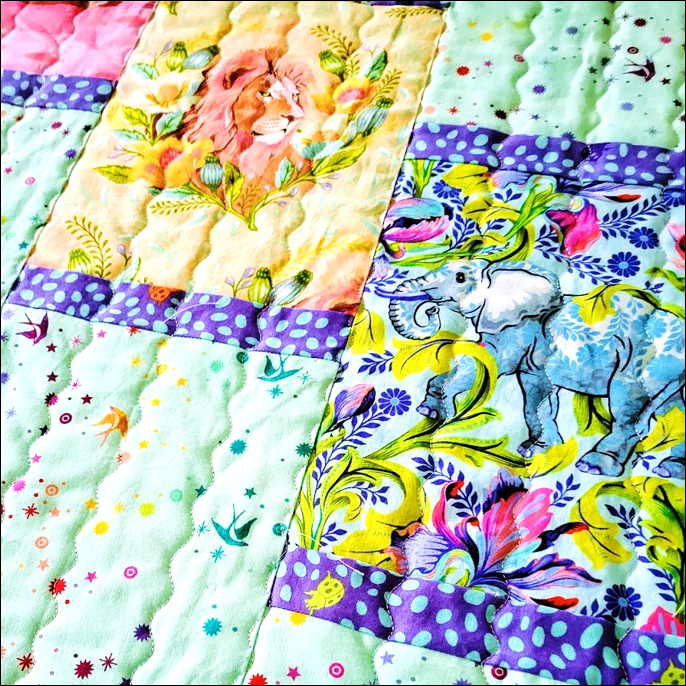
If you’ve ever looked through the decorative stitches built into your sewing machine and wondered whether any of them could actually be useful for quilting, the answer is yes!
And because decorative stitches feed automatically through the machine, it can also feel like a more approachable alternative to free-motion quilting for many quilters, and potentially more interesting than simple straight-line walking foot quilting.
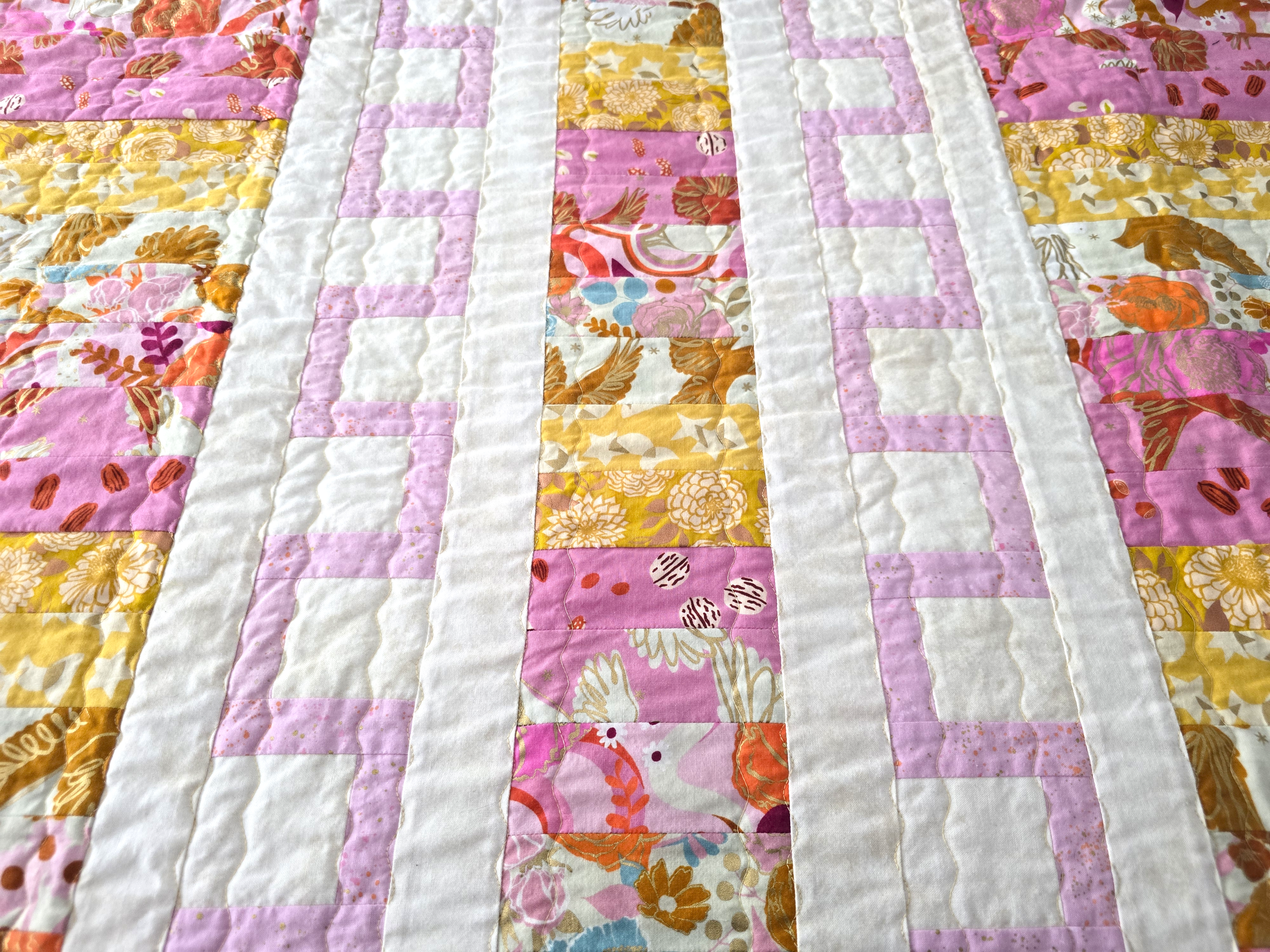
In my newest YouTube video, I’m exploring one of my favorite built-in decorative stitches for machine quilting: the wave stitch, sometimes called the serpentine stitch.
At first glance, this stitch may seem fairly simple – and many quilters have used it for basic channel quilting – but it actually offers a surprising amount of flexibility and creative potential.
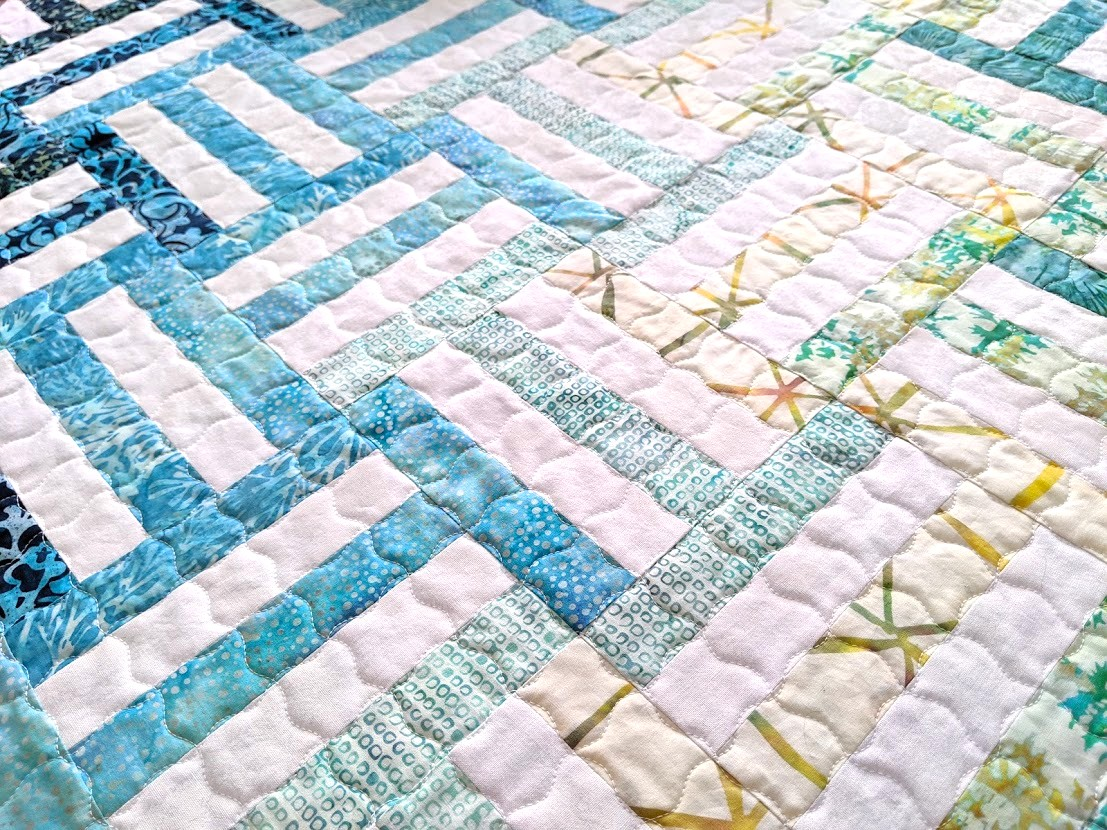
One of the things I especially enjoy about the wave/serpentine stitch is how dramatically the look can change with only a few small adjustments.
Changing the:
- stitch length
- stitch width
- spacing between rows
- quilting path
- or thread color
can completely change the finished appearance of the quilting. Some versions create soft, subtle texture that blends quietly into the quilt, while others create bold movement and visible design lines.
Cover quilt pattern: the Easy Pieces Quilt by Beth Ann Williams
In This Video, We Explore:
- Basic channel quilting with decorative stitches
- Alternating stitch settings for visual variety
- Quilting centered over seams and patchwork lines
- Grid quilting anchored by the patchwork
- All-over quilting grids independent of the patchwork
- Spacing considerations for different projects
- Blending vs contrasting thread choices
- Walking foot and dual-feed considerations
- What to do if your thread breaks while quilting
I also demonstrate my preferred stitching order for channel quilting larger projects so that the quilting stays more balanced while reducing the amount of marking needed.
As always, I strongly encourage making small stitch samples and experimenting with different combinations before quilting a full project.
There is no single “correct” way to use decorative stitches for quilting. Part of the fun is discovering which stitches, settings, and quilting paths feel most enjoyable and useful to you on your own machine. Sometimes the most interesting results happen when we simply become curious enough to explore the tools we already have!
✨ Quilting Friends members also receive a printable design resource to accompany this video as a personal “thank you” from me. ✨
Click here to learn more about the Quilting Friends membership. It’s costs less than a monthly cup of fancy coffee to join!